


Every hour an engineer spends redrawing a part variant that already exists, or manually rebuilding a BOM for a near-identical order, is an hour not spent on the next new design. Engineering design automation removes that repetitive work from the critical path entirely — and the effect shows up directly in how fast a product reaches market.
Here are five concrete ways automated CAD workflows shrink time-to-market for engineering and manufacturing teams.
1. Automatic Model and Drawing Generation
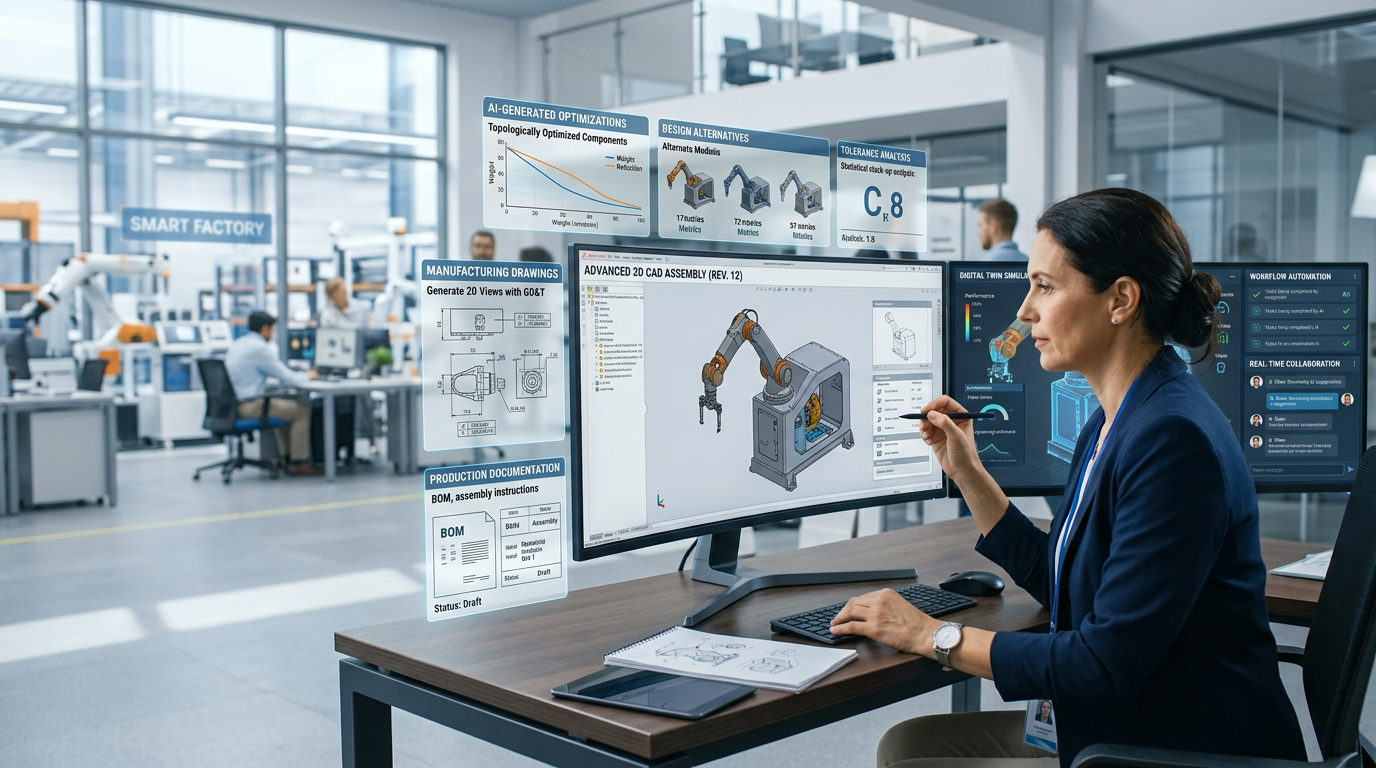
Rule-based CAD automation captures the engineering logic behind a configurable product once, then generates the model and drawing for any valid configuration automatically. Instead of an engineer manually redrawing a variant, the system produces it in minutes, freeing engineering capacity for genuinely new design work rather than repetition of known-good designs.
2. Fewer Review Cycles
Manual drawings introduce manual errors — a missed dimension, an out-of-date standard, a copy-paste mistake from the last project. Automated generation applies the same validated engineering rules every time, so drawings arrive at review already conforming to standard, which means fewer review-rework loops before a design is released.
3. Faster, More Accurate Quotations
When configuration, pricing, and drawing generation are connected, a sales quote no longer has to wait in an engineering queue. Configure-price-quote workflows generate an accurate, engineering-validated quote the moment a customer's requirements are entered, cutting days or weeks off the front end of the order cycle.
4. Bottleneck-Free Order Fulfilment
In configure-to-order manufacturing, engineering is frequently the bottleneck between a signed order and a released job. Automating the drawing, BOM, and manufacturing-document generation for standard and near-standard configurations means production can start almost immediately after order entry, instead of waiting in an engineering backlog behind unrelated projects.
5. Engineering Capacity That Scales With Demand
Order volume growth traditionally means headcount growth in engineering. Design automation breaks that link for repeatable, rule-based product families: the same engineering team can support significantly more order volume because the routine, repeatable share of their workload is handled automatically, leaving their time for the genuinely novel design problems that actually need an engineer.
Together, these five effects compound — faster quotes lead to faster order entry, faster drawing generation leads to faster release to production, and freed-up engineering capacity means the next new product starts sooner. DevWorks Automation helps manufacturers identify which product families are the best fit for design automation and implement the CAD and CPQ workflows to support them.