



Drive Smarter Workflows with RPA Automation
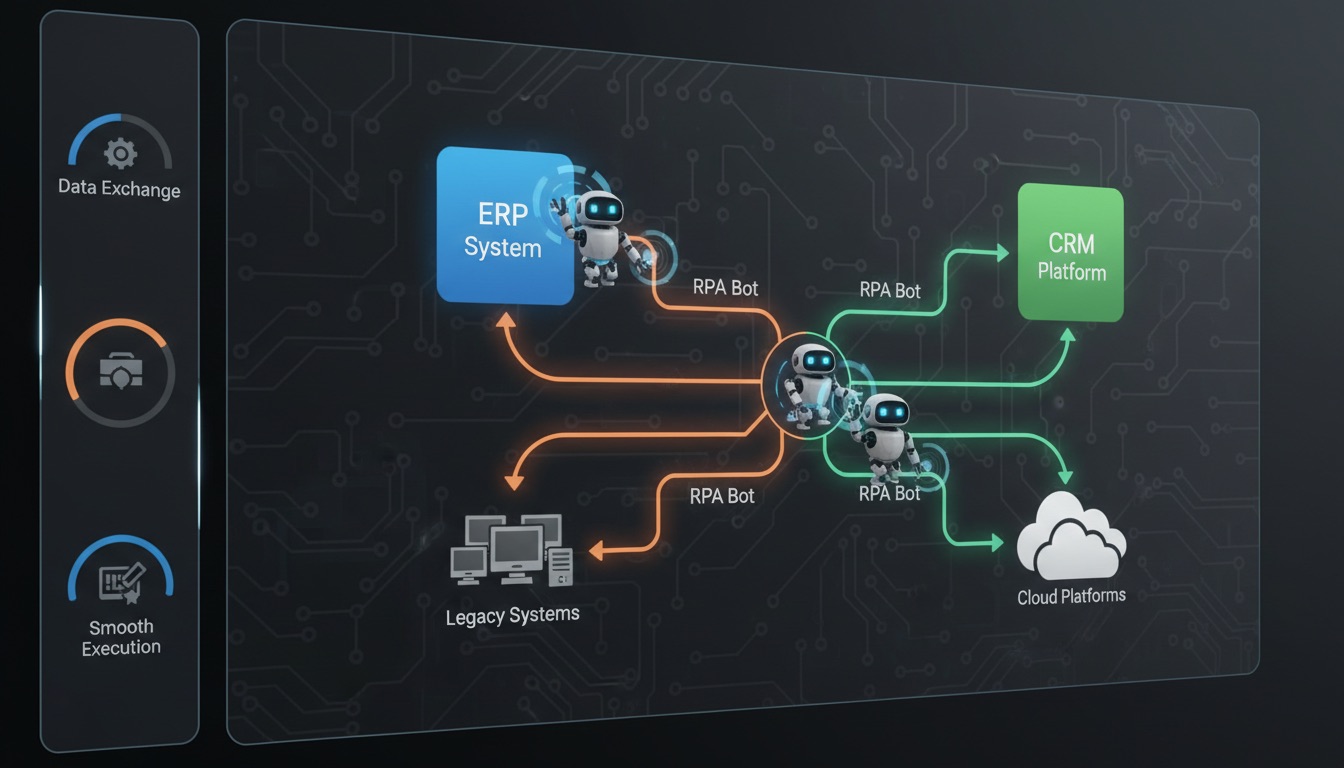
Inefficient manual tasks often create bottlenecks in key operations, impacting approvals, data movement, and reporting accuracy. Our RPA solutions eliminate these friction points by introducing structured, intelligent automation. From adaptive SLA routing and pricing logic to automated compliance handling, we align automation with your business processes. The result is a flexible system that adapts to changing demands while maintaining performance. We go beyond automation by helping you build a smarter, cost-efficient operating model that improves productivity without added strain. DevWorks RPA connects directly to your existing ERP and CRM systems, so automation runs on top of the tools you already use instead of requiring a system replacement.

RPA Services We Offer
Our RPA development services guide you through every stage of your automation journey, from identifying opportunities and building solutions to deploying and scaling them seamlessly within your operations.

RPA Consulting
We start with in-depth process assessments to identify high-impact automation opportunities with clear ROI. Our experts define a strategic roadmap, validate technical feasibility, and align automation initiatives with your business goals.
RPA Development
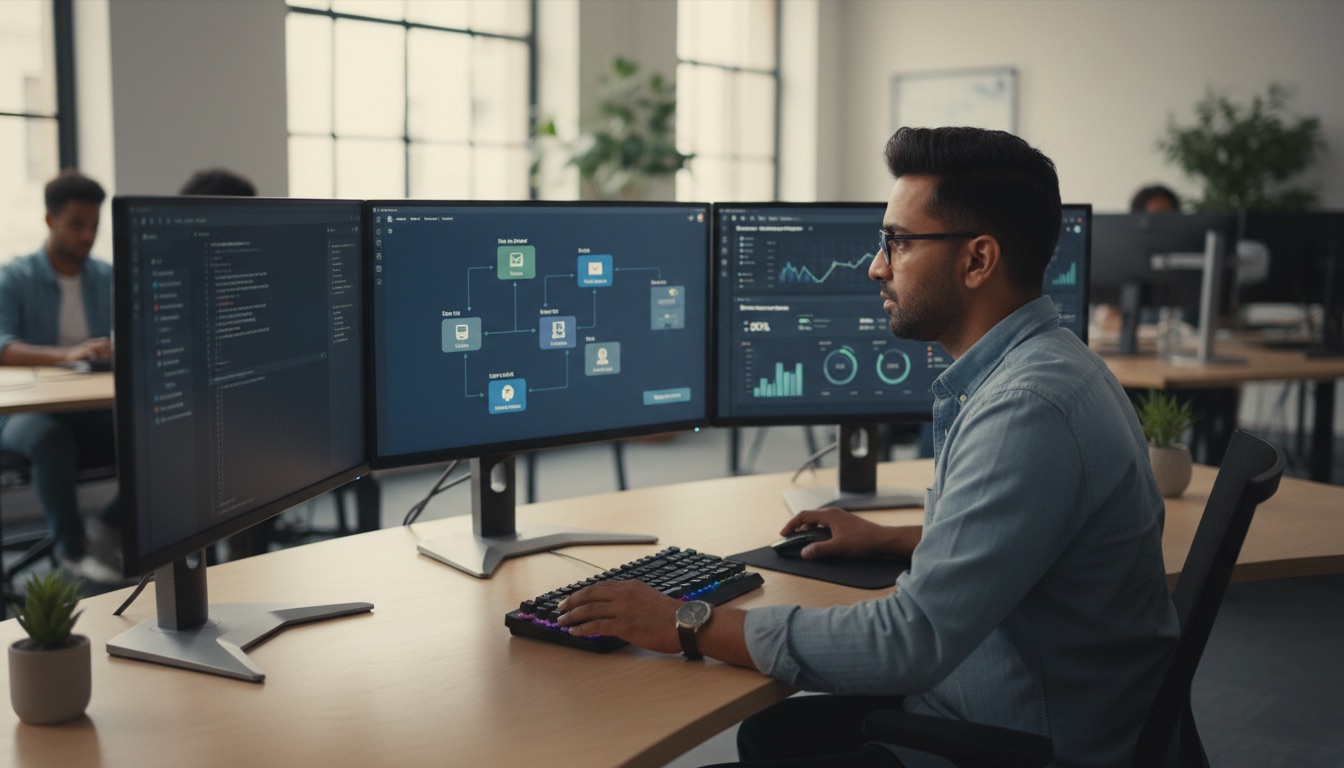
We design and build software robots that automate repetitive digital tasks, including data entry, report generation, and cross-application workflows, so your teams spend less time on manual handoffs and more on higher-value work.
RPA Integration
We connect RPA bots to ERP, CRM, legacy systems, and cloud platforms, ensuring reliable data exchange and smooth execution across the tools your business already runs on.

Business Process Automation
We map and automate end-to-end business processes beyond individual tasks, streamlining approvals, departmental handoffs, and exception handling so operations run consistently at scale.
Custom RPA Bots
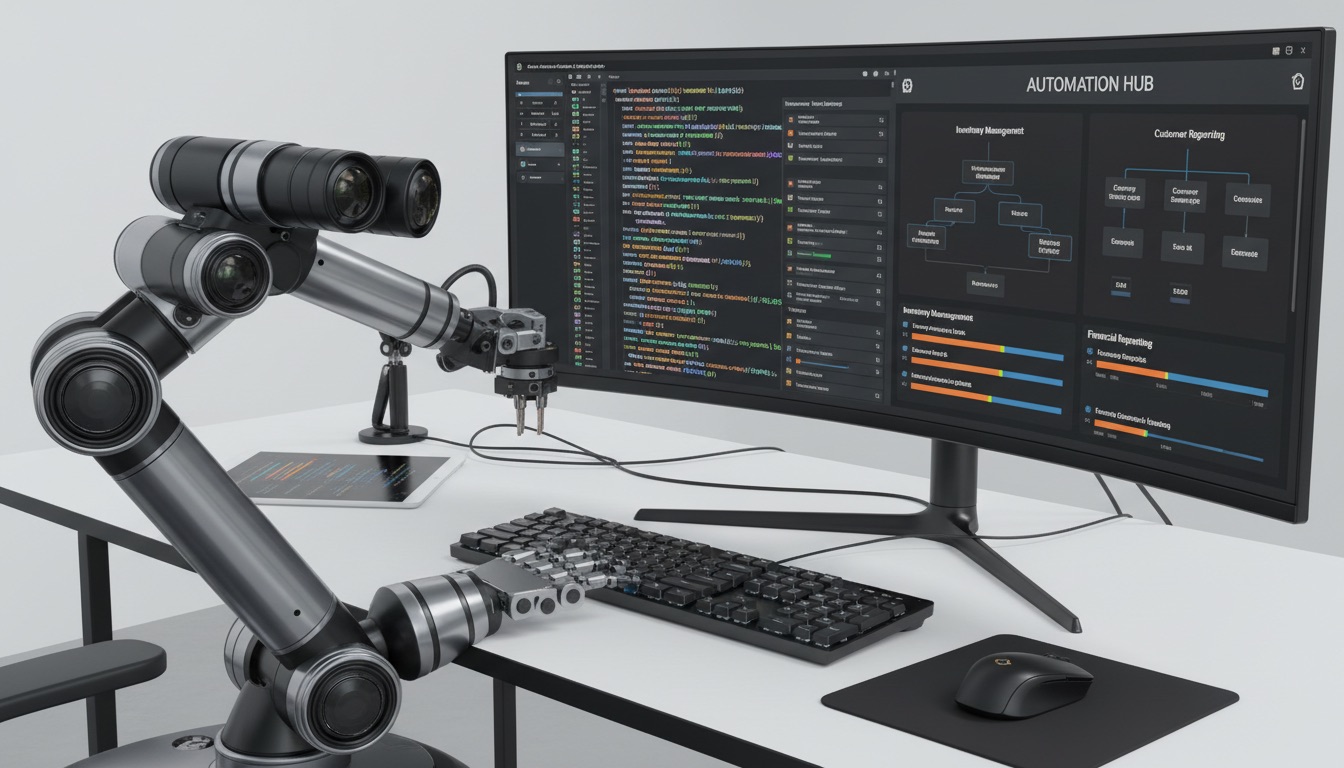
We develop tailored bots for your unique workflows, from document processing and invoice handling to inventory updates, compliance checks, and customer onboarding.

RPA Monitoring & Analytics
We implement monitoring, logging, and analytics so you can track bot performance, catch failures early, measure ROI, and continuously improve your automation program.
RPA Models We Implement
Choose the right automation model that aligns with your workflows, improves efficiency, and supports your business operations.

Attended RPA
Supports employees in real time by automating repetitive tasks during active workflows.


Unattended RPA
Runs independently to handle back-office and rule-based processes without human input.

Hybrid RPA
Combines human interaction and automation for flexible, end-to-end process execution.
Attended RPA
Supports employees in real time by automating repetitive tasks during active workflows.
Unattended RPA
Runs independently to handle back-office and rule-based processes without human input.
Hybrid RPA
Combines human interaction and automation for flexible, end-to-end process execution.
How We Deliver RPA Solutions
We follow a structured Software Development Life Cycle (SDLC) to deliver high-quality solutions on time and with minimal risk. From initial idea to final launch, our approach ensures clear direction, seamless collaboration, and efficient execution, so the end product aligns perfectly with your business goals.
Discovery & Feasibility Analysis
We assess automation potential, process complexity, and expected ROI to identify the right opportunities.
Solution Blueprinting
We define workflows, logic, exceptions, and system dependencies to create a clear automation roadmap.
Development & Configuration
Our team builds bots using secure frameworks with proper access controls and logging mechanisms.
Testing & Validation
We perform functional, performance, and regression testing to ensure deployment readiness.
Deployment & Knowledge Transfer
We manage smooth rollouts with minimal disruption and provide training for end-users.
Monitoring & Optimization
We continuously monitor performance and optimize bots based on KPIs and feedback.
RPA Use Cases Across Industries
See how organizations leverage automation to accelerate workflows, cut operational costs, and ensure consistent performance.
Automate the capture, validation, and approval of invoices and expenses to reduce manual effort, eliminate errors, and speed up financial operations.
Automate order entry, stock level updates, and reorder triggers across sales and inventory systems to reduce stockouts and manual reconciliation.
Automate account provisioning, document collection, and system access changes when employees join or leave, reducing HR and IT admin workload.
Keep customer and order data synchronized between CRM and ERP systems automatically, eliminating duplicate manual entry and data mismatches.
Automatically categorize and route incoming support tickets to the right team based on rules, cutting response time on repetitive request types.
Automate recurring compliance checks and report generation from operational data, reducing manual audit prep and missed deadlines.
Automate claims intake, validation, and status updates to speed up processing time and reduce manual review of routine claims.
Automate repetitive HR workflows such as leave requests, payroll data entry, and record updates across HR systems.
Frequently Asked Questions
RPA uses software bots to perform repetitive, rule-based digital tasks, such as data entry or approvals, the way a person would, without changing your existing systems.
Attended RPA supports employees during active tasks, unattended RPA runs independently on back-office processes, and hybrid RPA combines both in a single workflow.
Yes. RPA bots can connect to existing ERP, CRM, and other business systems to move and validate data without replacing your current software.
Common examples include invoice processing, order and inventory management, employee onboarding, ticket routing, compliance reporting, and claims processing.
No. RPA bots operate on top of your existing applications, automating the manual steps between them rather than replacing the systems themselves.
It starts with a feasibility assessment, then solution design, bot development and testing, deployment with training, and ongoing monitoring and optimization.